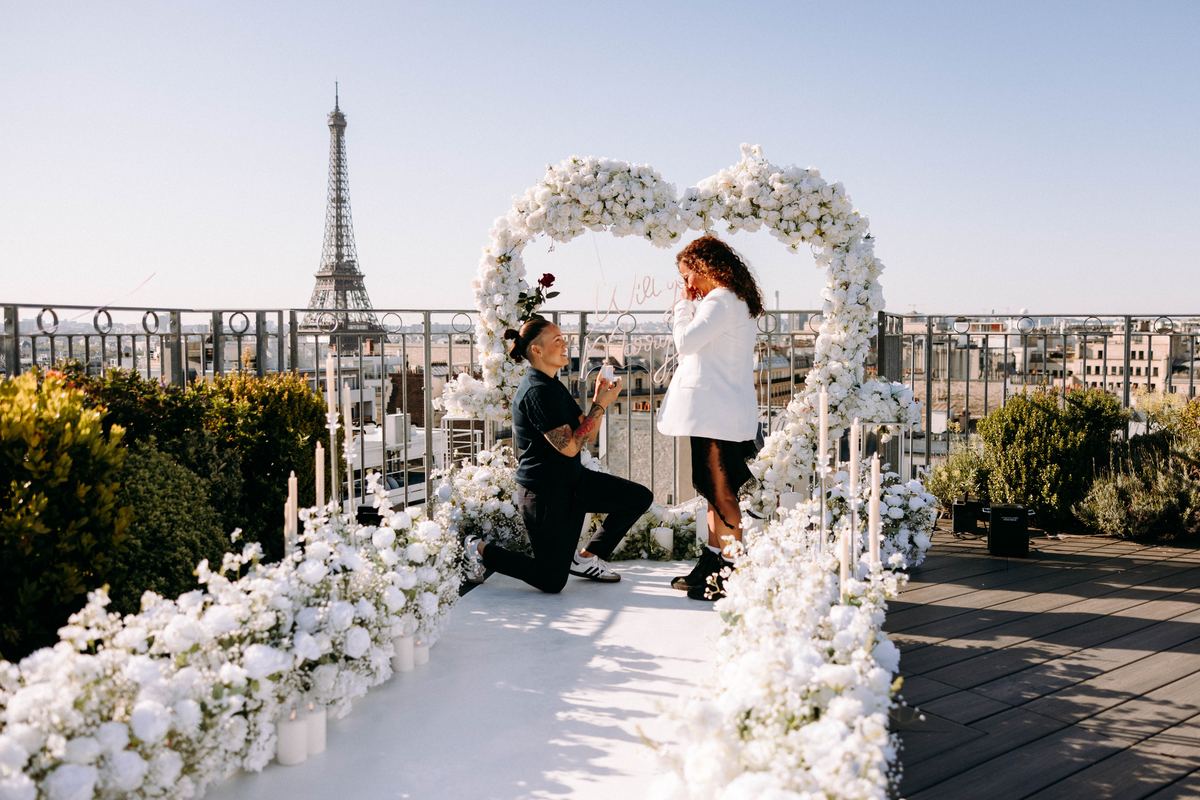
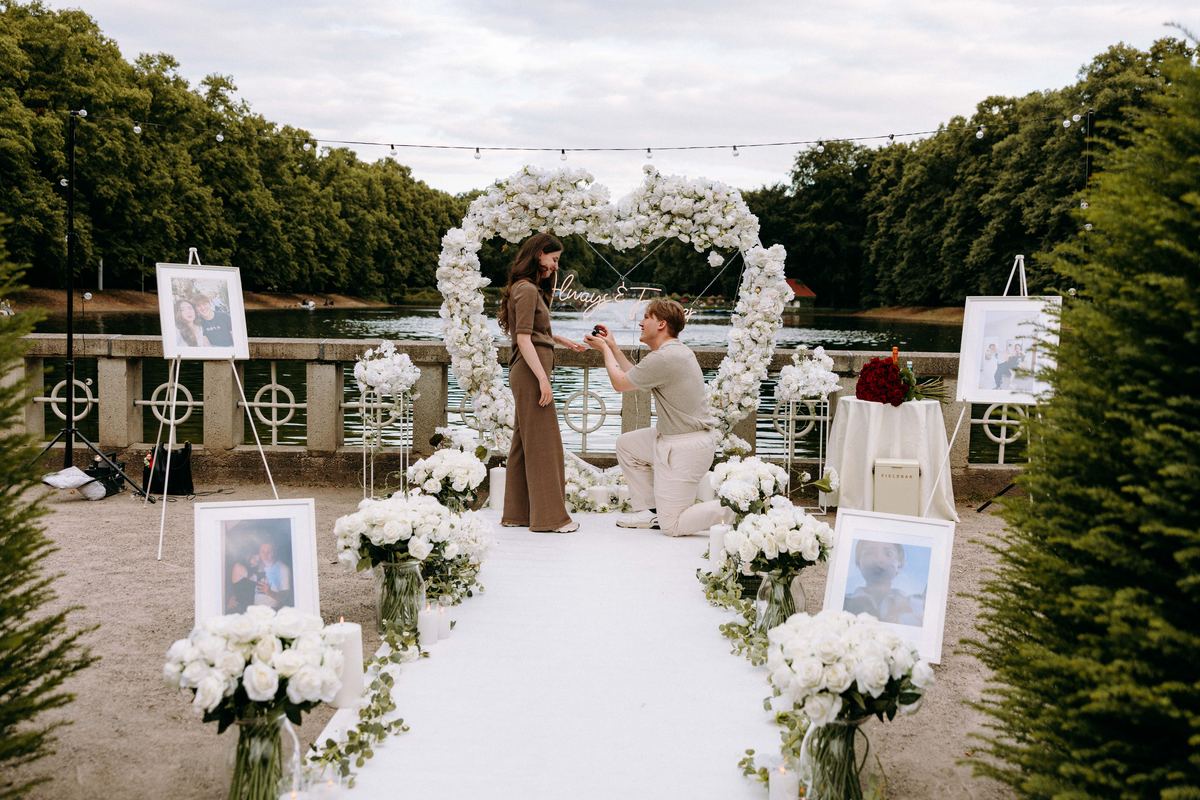
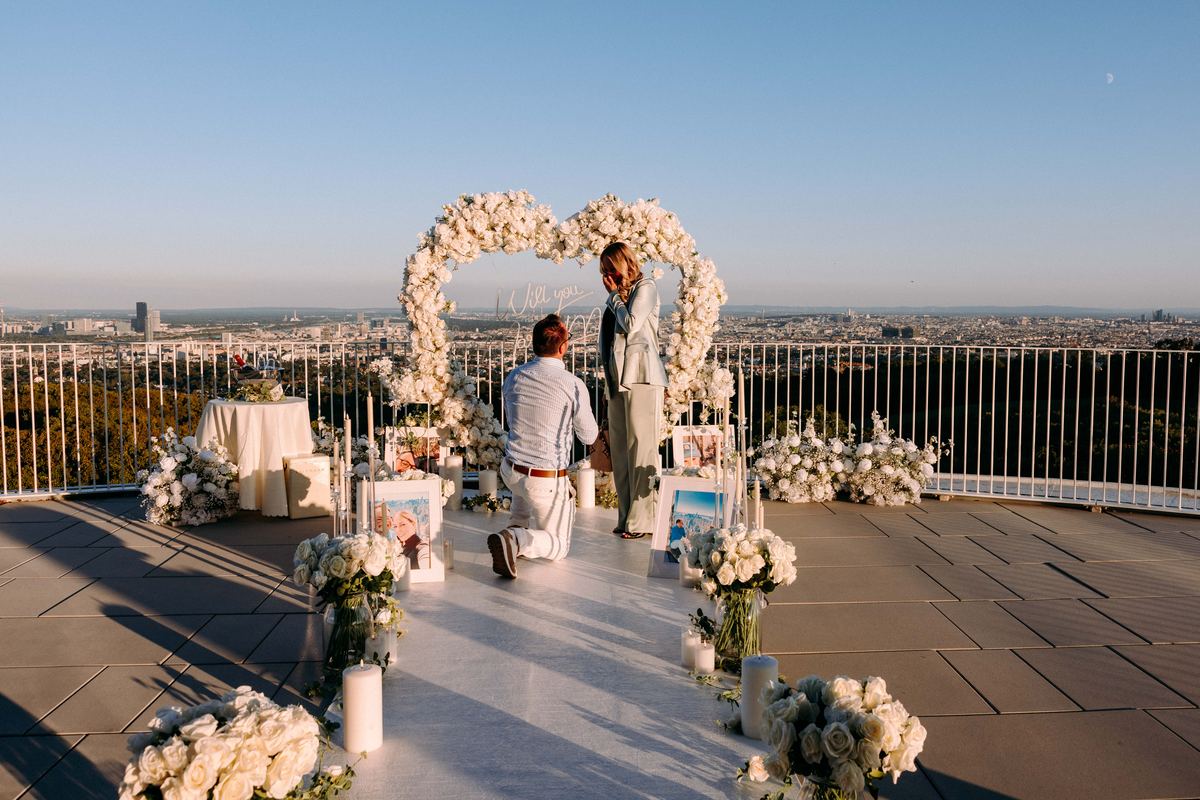
This is one of the most common questions we get asked, and the honest answer is: there's no universally right answer. Both approaches have produced some of the most emotional, perfect proposals we've ever been part of. The question is which is right for your specific relationship.
The Case for a Complete Surprise
There is something irreplaceable about the genuine shock of a surprise proposal. That moment of total disorientation – the brain trying to catch up with what the eyes are seeing – produces a completely unguarded emotional reaction that no amount of "how do you feel?" interviews on morning television can fake.
The photos from surprise proposals tend to be more powerful. The genuine expression of someone realising what's happening is a very different thing from someone who is happily anticipating it.
A surprise also tells your partner something important: that you thought about this on your own. That you chose a ring, a place and a moment because you believed it was right. That kind of deliberate love is its own message.
The Risks of a Complete Surprise
Surprises carry risk. The main ones are: the ring doesn't fit her style, the location isn't somewhere she'd choose, and – the most important one – she says yes but is actually not quite ready and needs time to feel the joy she expected to feel.
These are not hypothetical risks. They happen. A partner who felt pressured into saying yes in a public place, without feeling fully ready, can experience a complicated mix of happiness and anxiety that takes time to resolve. If you have any uncertainty about whether your partner wants to be married to you right now, a conversation before the proposal is always the better choice.
The Case for Planning It Together
More couples are choosing to discuss marriage openly before the formal proposal – and then staging the proposal as a known but still romantic and emotionally significant event. This approach eliminates the risk of the ring being wrong, the timing being off, or the setting being uncomfortable.
What it doesn't eliminate is the meaning of the moment. Knowing a proposal is coming doesn't make hearing the words less moving. Knowing the ring is coming doesn't stop tears.
Many of our most emotionally powerful proposals were ones where both people knew what was happening – and it was still overwhelming when it did.
A Middle Path: The "Semi-Surprise"
The approach that works best for many couples is what we call the semi-surprise: you discuss marriage and your future together clearly enough that your partner knows it's coming, but you plan the proposal itself as a complete surprise. The when, where and how remain unknown. The ring may or may not be a surprise.
This gives your partner the emotional security of knowing they're ready, while still preserving the romantic theatre of not knowing how or when.
How to Decide
- Has marriage come up naturally in your relationship? If yes, a surprise is likely fine.
- Is your partner the kind of person who hates surprises in general? A semi-surprise is probably better.
- Have you been together long enough that the ring choice is something you can predict? If not, a placeholder ring and ring shopping together afterwards is a sensible middle ground.
- Is there any ambiguity about whether they're ready? Have the conversation before the proposal.
Ready to Plan?
Let Us Create Your Perfect Moment
500+ proposals planned. 5.0 ★ Google. Available across Europe.
Plan My Proposal →Read Next